
Dracozolt
Fossil Pokémon
In ancient times, it was unbeatable thanks to its powerful lower body, but it went extinct anyway after it depleted all its plant-based food sources.
Base Stats
Type Effectiveness
Abilities
Evolution Chain
Moves
Details
Sprites
 Front
Front Back
Back Front Shiny
 Back Shiny
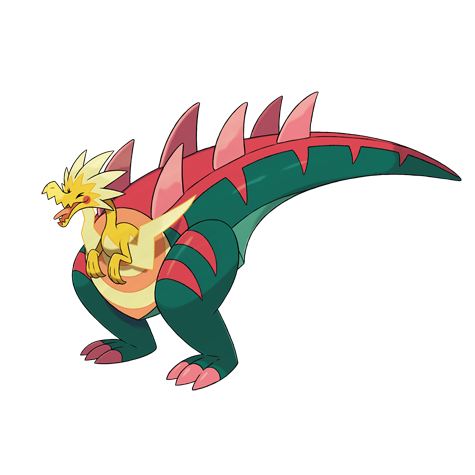 Official Art
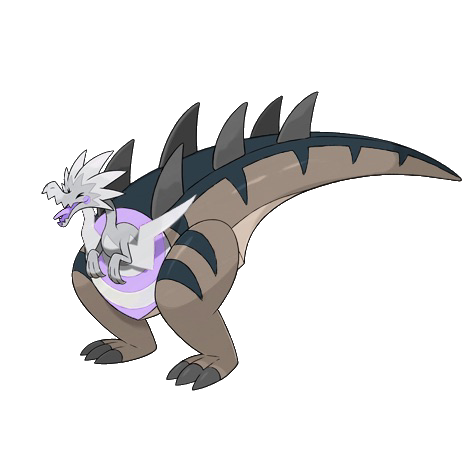 Official Art (Shiny)
Competitive
Strategy Overview
Dracozolt has a minor niche in DOU as as a secondary attacker on sand teams, supplementing Excadrill as a Sand Rush sweeper with Bolt Beak's high power and Electric-type coverage. Enabled by Sand Rush, Bolt Beak makes Dracozolt a threatening attacker, as its massive power makes it somewhat difficult to handle for fast offensive archetypes. Dracozolt stands as one of sand's better answers to Water-types, such as Volcanion, Tapu Fini, and Urshifu-R, as it is decently capable of switching in on their Water-type attacks and threatens to KO them back—a niche over its main competition in Dracovish. Dracozolt's biggest downfall, however, lies in its reliance on Bolt Beak to be useful. While its Electric typing does let Dracozolt beat some key threats, it's also easily answered by too many popular Pokemon in the metagame, such as Rillaboom, Amoonguss, Landorus, Zeraora, Zygarde, and Assault Vest Kyurem-B. Bolt Beak's conditionality, which also effectively makes Tyranitar a compulsory teammate, is also easily circumvented by speed control such as Tailwind and Trick Room, and without Bolt Beak's doubled power, Dracozolt is simply mediocre due to its actually paltry offensive base stats. Ultimately, Dracozolt can be hard to fit onto sand teams because of the stiff competition among Sand Rush attackers and how having multiple together puts too much pressure on Tyranitar. Additionally, Dracozolt is the only one truly vulnerable to getting slowed down by Intimidate, as it is unable to get through Incineroar and Landorus-T, unlike Excadrill and Dracovish.
Most Used Moves
Common Teammates
Competitive data from Smogon University via data.pkmn.cc